Buying Guides
HDPE vs PET Bottles: Which Plastic Is Right for Your Product?
Compare HDPE and PET packaging bottles by appearance, common applications, customization options and material guidance before choosing a supplier.
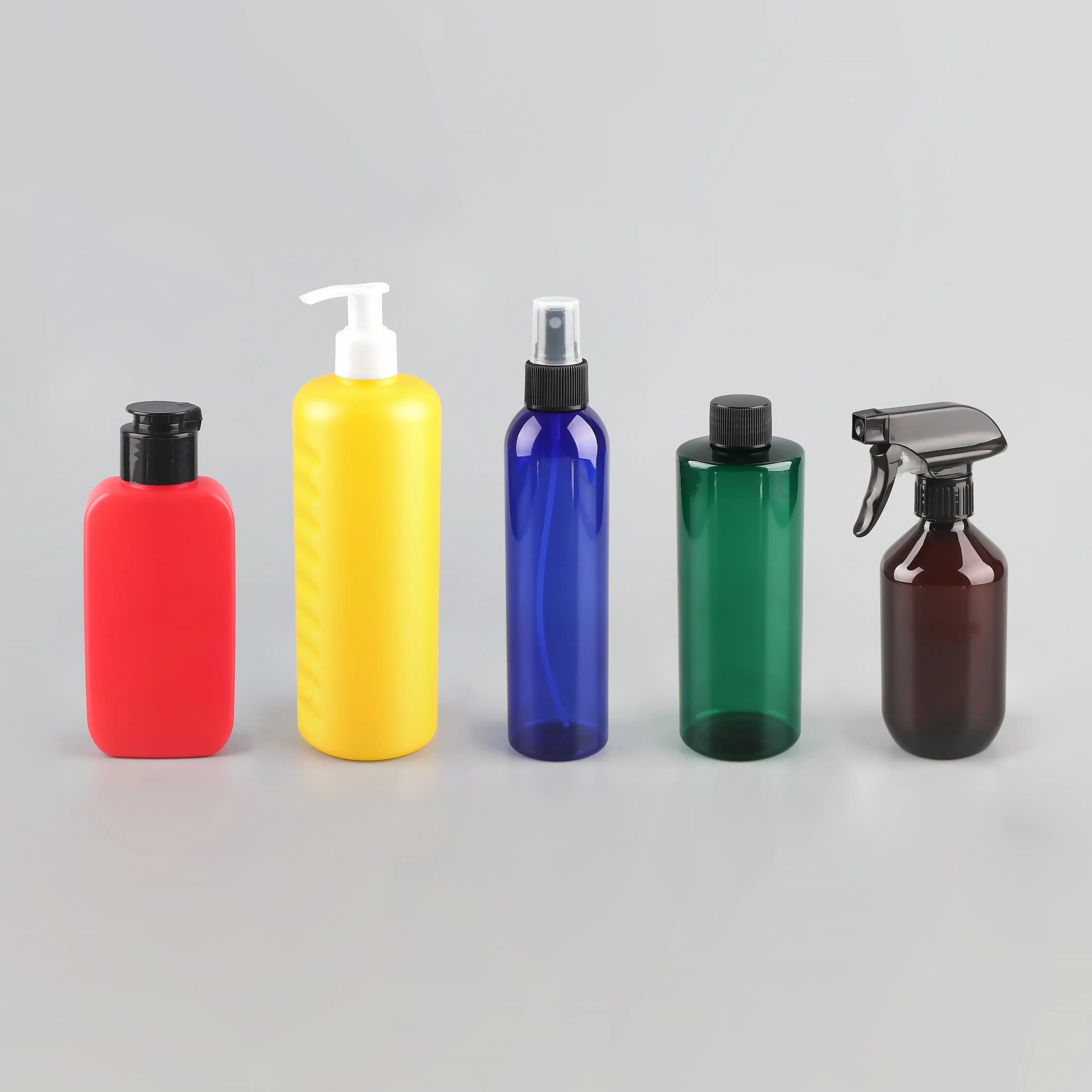
HDPE and PET are both common packaging plastics, but they behave differently in daily chemical and industrial applications. The right choice starts with the product, the shelf life and the look you want the bottle to have. This guide compares the two materials from a B2B buyer perspective and explains what to confirm before ordering.
The short answer
Choose HDPE when the bottle should be opaque, durable and available in custom colors, especially for shampoo, detergent and chemical products. Choose PET when the product itself should be visible, as with many lotion, spray and cosmetic bottles. If the project has both a clear and an opaque option, compare samples in the intended material before making the final decision.
Start with the product, not the material
The bottle has to fit the formula, the filling line and the way the buyer will use it. Before comparing materials, write down the product type, target volume, closure or dispenser, decoration, shelf presentation and order quantity. These inputs decide whether a clear or opaque bottle makes sense and which bottle line can meet the order.
A bottle that looks right in a photo may behave differently when filled. Ask for a sample in the intended material, color and finish, and test the cap or pump on that sample. This is especially important when the product is a spray, foam or gel.
HDPE at a glance
HDPE is a durable plastic commonly supplied in opaque form for shampoo, detergent and chemical bottles. It accepts custom colors and can be molded in many shapes. BOTUO supplies HDPE bottles for personal care, household cleaning and industrial product lines, including lotion, shampoo, spray and rectangle bottles.
Because HDPE is commonly supplied in opaque form, the bottle itself can carry the brand rather than show the product. For products where the formula color is not a selling point, this is often the practical choice.
PET at a glance
PET is commonly supplied in clear form, which shows the product inside. It is often chosen for lotion, spray and cosmetic bottles where appearance matters. BOTUO offers PET and HDPE options on selected bottle lines, so buyers can compare both materials where both are available.
A clear PET bottle can make a colored or textured formula part of the presentation. The trade-off is that the product is visible, so the filling and handling process needs to be consistent.
Compare the practical differences
Appearance is the first difference: HDPE is commonly supplied in opaque form, while PET is commonly supplied in clear form. Color options differ by bottle line, so confirm the available colors before choosing. Decoration also matters: BOTUO offers silk-screen printing and labeling on selected bottle lines, and the method should be chosen with the artwork and material in mind.
The closure is part of the package. Confirm the neck size, cap or pump type and liner on the same sample. A bottle and closure that fit on a prototype may behave differently at production speed, so the sample stage is the place to catch the issue.
MOQ, samples and delivery
The standard flexible MOQ starts at 5,000 pieces, while selected product lines start at 1,000 or 10,000 pieces. Free samples are available so the bottle, material, color and closure can be checked before a bulk order. The team responds within 24 hours and lists a delivery time of 7-28 days depending on the product and order details.
If the order quantity is below the MOQ of a specific line, ask whether another bottle in the same family can meet the volume. Do not assume that two visually similar bottles share the same MOQ or tooling.
What to send for a quote
Send the product type, target volume, material preference, cap or dispenser type, decoration and order quantity. If you already have a cap or sample, include its dimensions so the team can check compatibility. BOTUO can then confirm the bottle line, sample route and quotation.
The right material is the one that fits the product, the shelf presentation and the order plan. Compare both options with a sample before committing to a bottle line, and keep the approved sample as the reference for production.