Industry Insights
Silk-screen Printing vs Labeling for Bottle Packaging
Compare silk-screen printing and pressure-sensitive labeling for plastic bottles, including color, design flexibility, cost, durability and when each method fits.
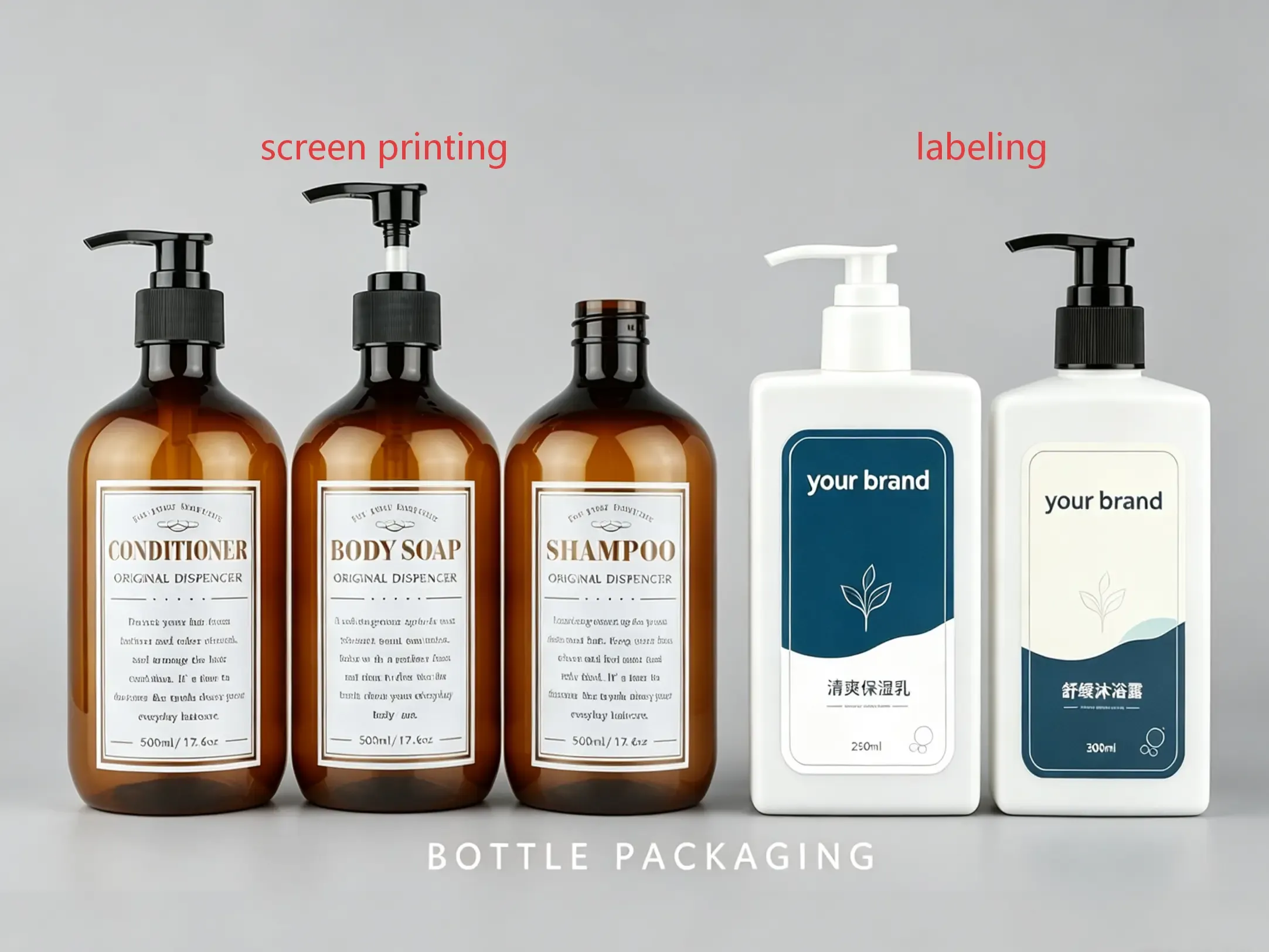
Two of the most common decoration methods for plastic bottles are silk-screen printing and pressure-sensitive labeling. Buyers often ask which one is more cost-effective. The answer depends on the design, the number of colors, the bottle shape and the order plan.
How silk-screen printing works
Silk-screen printing pushes ink through a mesh stencil directly onto the bottle. The price is usually based on the number of colors. As an indicative example in the source material, a single-color print may be around RMB 0.1 per piece, with each additional color adding cost.
The method is strongest for simple designs: solid colors, clean lines, a logo or limited graphics. It is usually cheaper than labeling when the artwork uses one or two colors and no gradients. The ink bonds directly with the plastic, so the print is resistant to scratching and fading.
Where silk-screen printing has limits
Each additional color needs a separate screen and print pass, so cost and production time rise with the color count. Gradients, photographs and multicolor illustrations are difficult and expensive, and reject rates can increase. For designs with more than three or four colors, the economics of silk-screen printing often decline.
How labeling works
Pressure-sensitive labels are printed first, usually by digital, flexo or offset printing, and then applied to the bottle. The cost of a single label may be similar to a single-color screen print, around RMB 0.1 in the same source example, but the total includes the label material and finishing such as lamination or varnish.
Labeling offers far more design freedom. It can reproduce smooth gradients, photographs and fine detail with almost no color limit. Label materials include synthetic paper, PE, PP, PET, PVC and coated paper. Adhesives can be permanent, removable or high-tack, and a protective film or varnish can improve durability and appearance. This makes labeling suitable for premium products, promotional bottles and packaging where visual impact matters.
Where labeling has limits
Labels can lift or peel at the edges, sometimes overnight, even when the bottle looked perfect after application. Common causes are a mismatch between the label material and the bottle, an adhesive that does not suit the plastic, or incorrect tension during application. The label is a sandwich of face material, adhesive and liner, and its internal tension works against the curve of the bottle. The material combination should match the bottle shape, the contents and the storage conditions.
High-speed labeling lines bring another set of challenges. The labeling machine is often one of the hardest units in a filling line to set up. Bubbles, wrinkles and misalignment can appear, especially on flat bottles where the label may shift left or right. Rolls can also vary from one batch to the next. Correct machine setup, consistent label quality and an experienced operator are key to reducing downtime and waste.
How to choose
Use silk-screen printing when the design is simple, the color count is low and the artwork has clean lines or a logo. It usually offers the lowest unit cost and good durability for large, standardized orders. Use labeling when the design needs rich color, gradients, photographs or complex images, or when designs change frequently. Labeling is also practical for small batches and highly customized projects because the artwork can change without a new screen.
The decision should also consider order volume, brand positioning, market regulations and the end-user experience. A simple, high-volume bottle often suits silk-screen printing; a premium or frequently refreshed line often suits labeling.
What to send for a quote
BOTUO handles both silk-screen printing and labeling and can advise on the material and process. Send the bottle specifications, design file and target budget. The team can compare the options, recommend the most economical reliable route, and provide samples and a quotation.
The right decoration method is the one that fits the design, the order and the way the bottle will be used. Compare both options with a sample before production.